Home Author
Author

Miranda Henry

Advertising

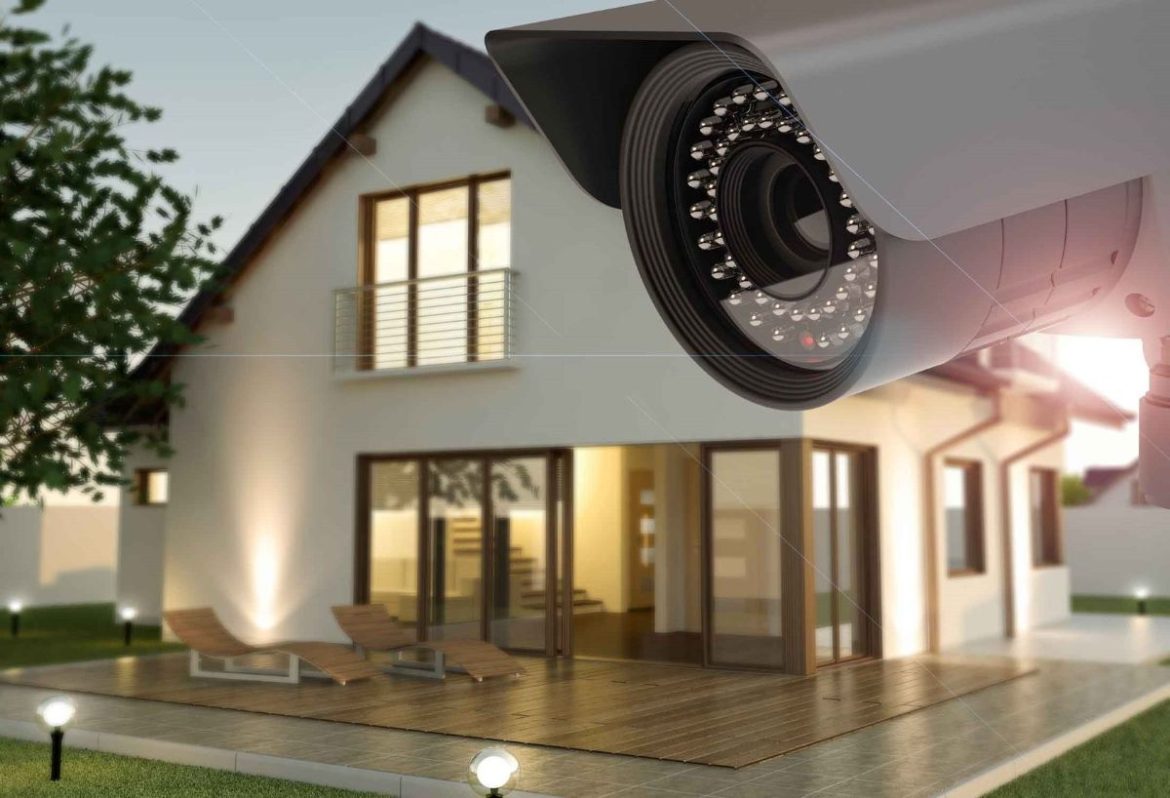
Home security is a priority for every family, and modern technology offers a variety of solutions that make protection effective, affordable, and convenient. From simple sensors to full-fledged video surveillance systems, anyone can now create a “digital shield” around their home.
Video intercoms with Wi-Fi and cloud storage support have become standard. They allow you to see who’s at the door, even from the other side of the world. Many models feature AI that recognizes faces, distinguishes between people, animals, and packages, and sends notifications only in the event of a real threat.
Smart locks are another step forward. They operate using fingerprints, PIN codes, NFC cards, or apps. The owner can issue temporary keys to guests, plumbers, or nannies, and then revoke them at any time. This eliminates the risk of key theft and simplifies access management.
Video surveillance systems now require no complex installation. Compact cameras like Arlo, Eufy, or YI are battery-powered or solar-powered, transmit video to the cloud, and are activated only by motion. Some models feature IR illumination and record in 2K resolution, even at night.

Pages: 1 2

Advertising

The kitchen is the heart of any home, and this is where technology can be most beneficial. Modern smart gadgets transform routine cooking into a fun process, save time, and help even novice cookers create restaurant-quality dishes. From Wi-Fi-enabled multicookers to smart scales, the choice of devices is growing every year.
Smart multicookers and pressure cookers, such as the Instant Pot Smart or Ninja Foodi, remain among the leaders. These devices connect to an app, allowing users to select recipes, set the time and temperature, and receive notifications when the dish is ready. Some models even adapt the cooking mode based on the amount of ingredients.
Smart scales and measuring cups are indispensable assistants for those monitoring their diet or baking. They sync with a smartphone, recognize products by barcode, and automatically calculate calories. Some models integrate with fitness trackers to help adjust daily diets in real time. New-generation coffee machines allow you to customize your drink down to the smallest detail: strength, temperature, and even the amount of milk foam. Using an app, you can schedule your morning coffee, which will begin brewing 10 minutes before your alarm. And voice assistants let you order an espresso without leaving the couch.
Smart refrigerators are no longer science fiction. The Samsung Family Hub, for example, features a touchscreen, internal cameras, and food recognition. It can suggest recipes based on what’s in the fridge, create a shopping list, and even order missing ingredients online.

Pages: 1 2

Advertising

A smart home is more than just a collection of gadgets, but a holistic ecosystem that automates everyday tasks, saves resources, and enhances comfort. Modern technologies allow you to control lighting, climate control, appliances, and even curtains using a smartphone, a voice assistant, or preset scenes. This is especially relevant in the face of rising energy prices and the desire for a more sustainable lifestyle.
The heart of a smart home is usually a hub or control center—a device that connects all gadgets into a single network. Popular platforms such as Apple HomeKit, Google Home, Amazon Alexa, and Samsung SmartThings ensure compatibility between devices from different manufacturers. This allows users to create complex scenes: for example, opening a door turns on the light, starts the coffee maker, and raises the temperature in the living room.
Lighting remains one of the most popular elements of a smart home. Smart light bulbs not only adjust brightness and color but can also mimic natural daylight, which positively impacts circadian rhythms. Some models integrate with motion sensors, turning on only when someone is in the room, reducing energy consumption by 30-40%.
Climate control is another important area. Smart thermostats like Nest or Ecobee analyze occupant habits, the weather outside, and even the presence of people in the home to maintain an optimal temperature. This is not only comfortable but also economical: such devices can reduce heating and air conditioning costs by up to 20%.

Pages: 1 2

Advertising

The metaverse is the concept of a persistent, immersive digital environment where people interact through avatars, work, learn, have fun, and even own digital property. Although the term originated in the 1990s, it has become a reality today thanks to VR, AR, blockchain, and cloud technologies.
The foundation of the metaverse is virtual and augmented reality. Headsets like the Meta Quest 3 or Apple Vision Pro provide high-quality immersive experiences. Users can attend concerts, meet friends, or train in simulations without leaving home.
Blockchain and NFTs play a key role, allowing users to own digital assets—from avatar clothing to virtual real estate. Platforms like Decentraland and The Sandbox are already selling land plots for cryptocurrency, and brands are opening virtual stores.
The metaverse is changing the way we work. Virtual offices allow teams from different countries to collaborate in a 3D space using gestures, voice, and visual tools. This increases engagement and creativity compared to video conferencing.
In education, the metaverse opens up new possibilities. Students can explore Ancient Rome, conduct chemistry experiments without risk, or study anatomy by peering inside the body. This approach makes learning interactive and memorable.

Pages: 1 2

Advertising

In the face of the climate crisis, sustainable technologies are becoming not just a trend, but a necessity. They aim to reduce carbon footprints, use resources efficiently, and minimize waste. From solar panels to biodegradable packaging, these solutions form the foundation of a green economy.
Renewable energy is one of the main drivers of sustainability. Solar and wind power plants are becoming cheaper and more efficient. New technologies, such as perovskite solar cells, promise efficiencies of over 30%. And energy storage systems based on solid-state batteries address the intermittency of renewable energy sources.
In transportation, electric vehicles (EVs) have already entered the mass market. But the future lies with hydrogen fuel cells and electric aviation. Companies like Airbus are developing zero-emission aircraft, and startups are creating electric trucks for long-haul transportation.
A circular economy is another key principle. Instead of the linear “production-consumption-disposal” model, a closed-loop approach is proposed, where waste becomes a resource. For example, recycled plastic is transformed into clothing, and organic waste into biogas or fertilizer.
In agriculture, sustainable technologies include vertical farms, hydroponics, and precision farming. Drones and sensors analyze soil and plant health, reducing water and pesticide use by 30-50%. This is especially important in times of drought and population growth.

Pages: 1 2

Advertising

Neural interfaces are technologies that directly connect the human brain to computers or other devices. They can read neural activity, convert it into commands, and transmit signals back to the brain. This field is rapidly developing thanks to advances in neuroscience, microelectronics, and machine learning.
One of the pioneers in this field is Neuralink, founded by Elon Musk. Its implantable chips can record the activity of thousands of neurons with high accuracy. The first clinical trials have already begun: paraplegic patients are learning to control a cursor or a robotic arm using just their thoughts.
There are also non-invasive neural interfaces, such as EEG helmets. Although less accurate, they are easy to use in everyday life. Today, such devices help people with cerebral palsy communicate, and developers are creating brain-controlled games and apps. In the future, they may become part of everyday life—for example, for controlling a smart home without voice or gestures. The primary goal of neural interfaces is to restore lost functions. People with spinal cord injuries, blindness, or deafness can regain mobility, vision, or hearing. Research shows that stimulating the visual cortex can create simple images, and auditory implants have been helping the deaf for decades.

Pages: 1 2

Advertising

Quantum computing is one of the most promising technologies of the 21st century. Unlike classical computers, which operate on bits (0 or 1), quantum machines use qubits that can exist in superposition—that is, be both 0 and 1 simultaneously. This enables them to solve problems inaccessible to even the most powerful supercomputers.
The principle of quantum entanglement allows qubits to instantly influence each other, regardless of distance. This property underlies quantum algorithms such as Shor’s algorithm for factoring large numbers or Grover’s algorithm for searching unordered databases. These algorithms have the potential to revolutionize cryptography, optimization, and molecular modeling.
Today, quantum computers are still at the Noisy Intermediate-Scale Quantum (NISQ) stage—they contain from 50 to several hundred qubits but are susceptible to errors due to decoherence. Nevertheless, companies like IBM, Google, Rigetti, and IonQ are already providing cloud access to their quantum processors, allowing researchers to experiment with real-world systems.
One of the key challenges is creating error-tolerant quantum computing. To this end, quantum error correction methods are being developed that require hundreds of physical qubits to create a single logical qubit. While this remains technically challenging, advances in superconducting circuits, ion traps, and topological qubits offer hope for a breakthrough in the coming years.

Pages: 1 2

Advertising

Artificial intelligence (AI) has come a long way from simple image recognition algorithms to complex systems capable of making decisions in real time. Modern AI models, especially those based on Transformer architectures, are demonstrating the ability not only to process massive amounts of data but also to generate content, engage in dialogue, and even display rudimentary reasoning. These advances are opening new horizons in medicine, education, finance, and other fields.
One of the key breakthroughs is the emergence of large-scale language models (LLMs), such as GPT-4, Llama, and Claude. They are trained on trillions of tokens and are capable of understanding context, generating code, writing essays, and answering complex questions. However, their “intelligence” remains statistical: the model doesn’t “think,” but rather predicts the most likely sequence of words. Nevertheless, to the user, this often appears as intelligent behavior.
Multimodality is becoming an important area of ​​AI development. Modern systems can simultaneously process text, images, audio, and video, making them versatile assistants. For example, a model can analyze an X-ray, describe it in natural language, and offer a diagnosis based on medical data. Such systems are already being implemented in clinics and diagnostic centers.
The ethical aspects of AI remain a major concern. Algorithms can reproduce biases embedded in training data, leading to discrimination or erroneous decisions. Therefore, developers are increasingly implementing “explainable AI” (XAI) mechanisms, which allow for an understanding of why a model made a particular decision. This is especially important in legal, healthcare, and banking.

Pages: 1 2

Advertising

Older Posts

Availability

Neutrglyce Ltd.

3000 Blvd. Saint-Martin O, Laval, Quebec H7T 0N6, Canada

[email protected] +14506289371

Disclaimer

This website is not intended for diagnostic purposes. Results may vary. This information does not constitute a direct recommendation and should not be construed as such. It does not replace personal advice or a visit to a qualified healthcare professional. Please consult a healthcare professional before taking supplements. The information provided should be used as a recommendation for a sustainable lifestyle and does not replace a varied and balanced diet.

Editors' Picks

All rights reserved.2025